The New Howdy Doody Show
Trailer
Synopsis
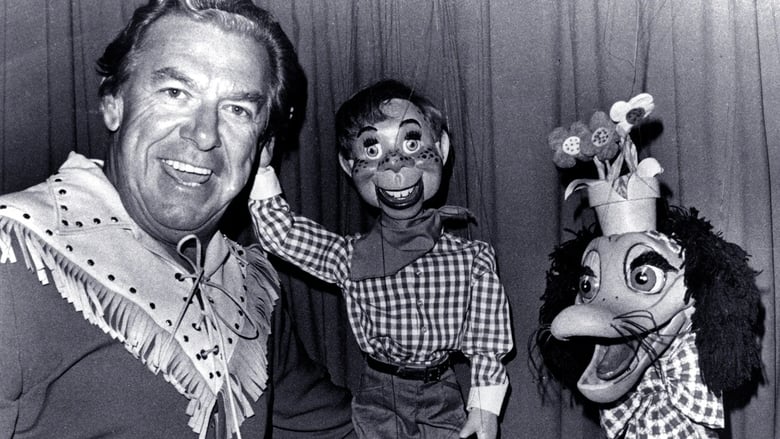
Say kids, what time is it? In 1976, Buffalo Bob Smith returned to Doodyville alongside a fully rebuilt cast of marionettes — Dilly Dally, Phineas T. Bluster, and the eight-animal hybrid Flub-a-Dub among them. Howdy himself got a contemporary 70s redesign, a choice Buffalo Bob would later describe as a misstep. The songs, the gags, and a live Peanut Gallery came back with them.
Context & Trivia
Following the positive public response to a 1975 "Happy Days" episode featuring Howdy Doody, original producer Roger Muir and Bob Smith decided to bring the show back to television. "The New Howdy Doody Show" began taping in Florida in August 1976. While it retained much of the 1950s format, it boasted a much larger budget and a more contemporary 1970s look. However, Buffalo Bob Smith himself would later remark that changing Howdy's look, which included actual 70s-style hair, was a mistake. The production was handled by Nicholson-Muir Productions, owned by Nick Nicholson and E. Roger Muir. Margo and Jim Rose were responsible for the marionettes' maintenance, building their bodies, and costuming them, while Paul Ashley constructed and animated the puppets' heads. Pady Blackwood served as the sole puppeteer for Howdy in this revival. Marilyn Patch (later Marilyn Patch Arnone) played Happy Harmony, Doodyville's schoolteacher, and was trained by Margo Rose to operate long-string marionettes. The show ran for 130 episodes and aired in syndication until 1977 or 1978.
Puppeteers
Pady Blackwood, Marilyn Patch Arnone
Voices
Bob Smith, Marilyn Patch Arnone
Puppet design
Margo Rose, Rufus Rose
Puppet companies
Nicholson-Muir Productions
Puppet building
Margo Rose · Rufus Rose
Created by
E. Roger Muir, Nick Nicholson
Direction
Errol Falcon, Bobby Nicholson
Writing
Willie Gilbert, E. Roger Muir
Cast
Bob Smith, Lew Anderson, Jackie Davis
Do you know more about this work?
Are you credited on this page and want your name corrected or removed? Request it here — no justification needed. For copyright claims or factual errors, use the same form.